CARE seeks a world of hope, tolerance and social justice. Learn more about us.
CARE works in the most vulnerable communities. Find out more how we make an impact.
CARE believes that fighting poverty in poor communities requires focusing on girls and women to achieve equality.
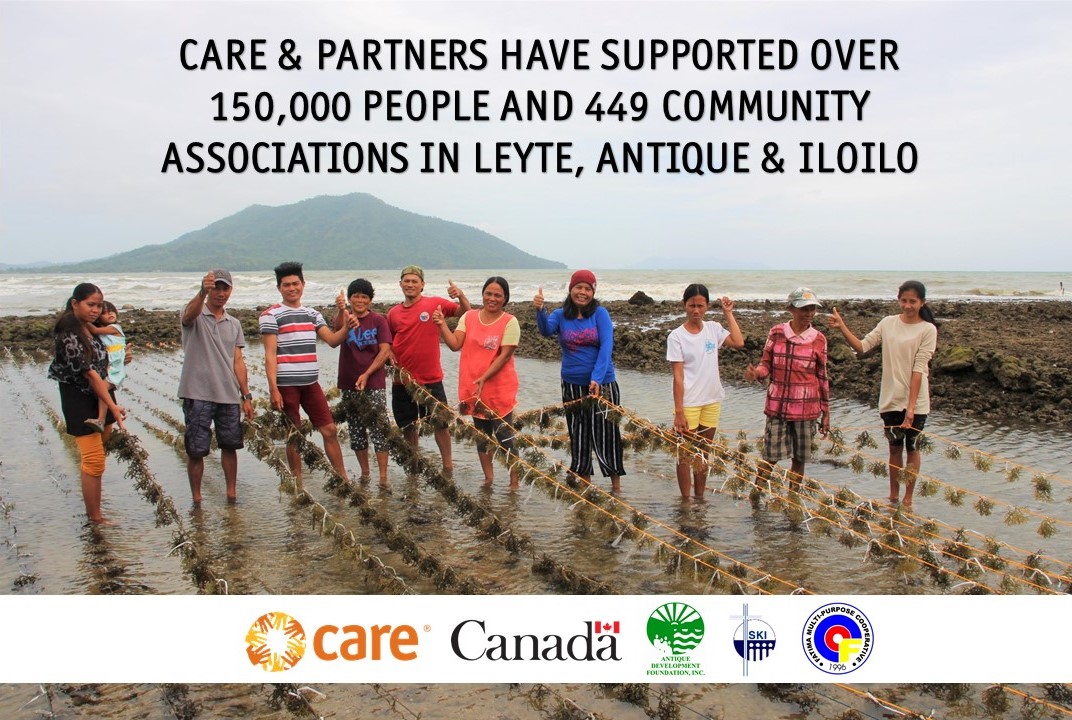
Three years after Haiyan, fisherfolks in Naborot Island in Iloilo have now recovered.
Thank you @GretaThunberg for trusting CARE. Your support will help us continue our advocacy to help poor communitie… twitter.com/i/web/status/1…
Collective action in communities, strategic partnerships, #communityengagement & #gender mainstreaming. These are s… twitter.com/i/web/status/1…
RT @_karamedina: "Innovation, for CARE, is the process of creating new value...and designing solutions," Tim Bishop of @careusa Innovations…
From Relief to Long-Term Recovery
We respond to dozens of disasters each year, reaching approximately 12 million people through our emergency programs.
Our decades of experience, expansive global reach and robust network of partners enable us to take a comprehensive approach to emergency relief.
In the Philippines, CARE empowers vulnerable communities & local advocates to strengthen their resilience to various disasters. Thus, CARE is integrating disaster risk reduction, climate change adaptation & ecosystems restoration and management across all our programs.
Women Empowerment
Why does CARE fight poverty by focusing on girls and women?
Because we have to.
It’s simple: In the world’s poorest communities, girls and women bear the brunt of poverty. Fighting poverty in those communities requires focusing on girls and women to achieve equality.
to support more than 1000 poverty-fighting development and humanitarian-aid projects.

CARE is a leading international humanitarian agency delivering emergency relief and long-term international development projects. Founded in 1945, CARE is nonsectarian, impartial, and non-governmental. In 2016, CARE worked in 94 countries supporting 962 poverty-fighting and humanitarian aid projects, and reaching over 80 million people and 256 million people indirectly.
In the Philippines, CARE worked since 1949 and is known for its disaster response, emergency preparedness, livelihoods recovery, and integrated risk management programs. CARE’s recent responses in the Philippines include typhoon Pablo (Bopha) in 2012, Yolanda (Haiyan) in 2013, Ruby (Hagupit) in 2014, Lando (Koppu) and Koppu (Melor) in 2015, Karen (Sarika), Lawin (Haima), Nina (Nock-ten) in 2016, and the earthquake in Surigao City in 2017. CARE is currently implementing a number of urban resilience, disaster risk reduction, and economic development programs in the Philippines.